
The spec is the easy part. The edge cases in production feeds are the real work — and nowhere is that clearer than building claims automation in the Gulf. (This piece covers the rails layer of our complete guide to claim denial prevention.)
On paper, this region is an integrator's dream. Dubai has run health claims through DHPO/eClaimLink for years; Saudi Arabia's NPHIES mandate has pushed the whole market onto standardized e-claims. The transactions are electronic end to end. And yet walk into a revenue-cycle office in either market and you'll find staff re-keying data between the HIS, payer portals and the mandated platform — because a mandated wire format is not a mandated workflow.
The trap: building your logic against a national format
The tempting shortcut is to build your automation directly against the rail you face today — DHA eClaim XML for Dubai, NPHIES FHIR profiles for Saudi. I've reviewed systems built this way. Every one of them hit the same wall:
- National formats version, and when they do, the change ripples through your entire codebase instead of one adapter.
- The moment you serve a second market — or a second EMR — you're maintaining parallel business logic per format, which drifts apart within a quarter.
- Audit and analytics become format archaeology, because there's no single shape of truth to query.
The architecture, concretely
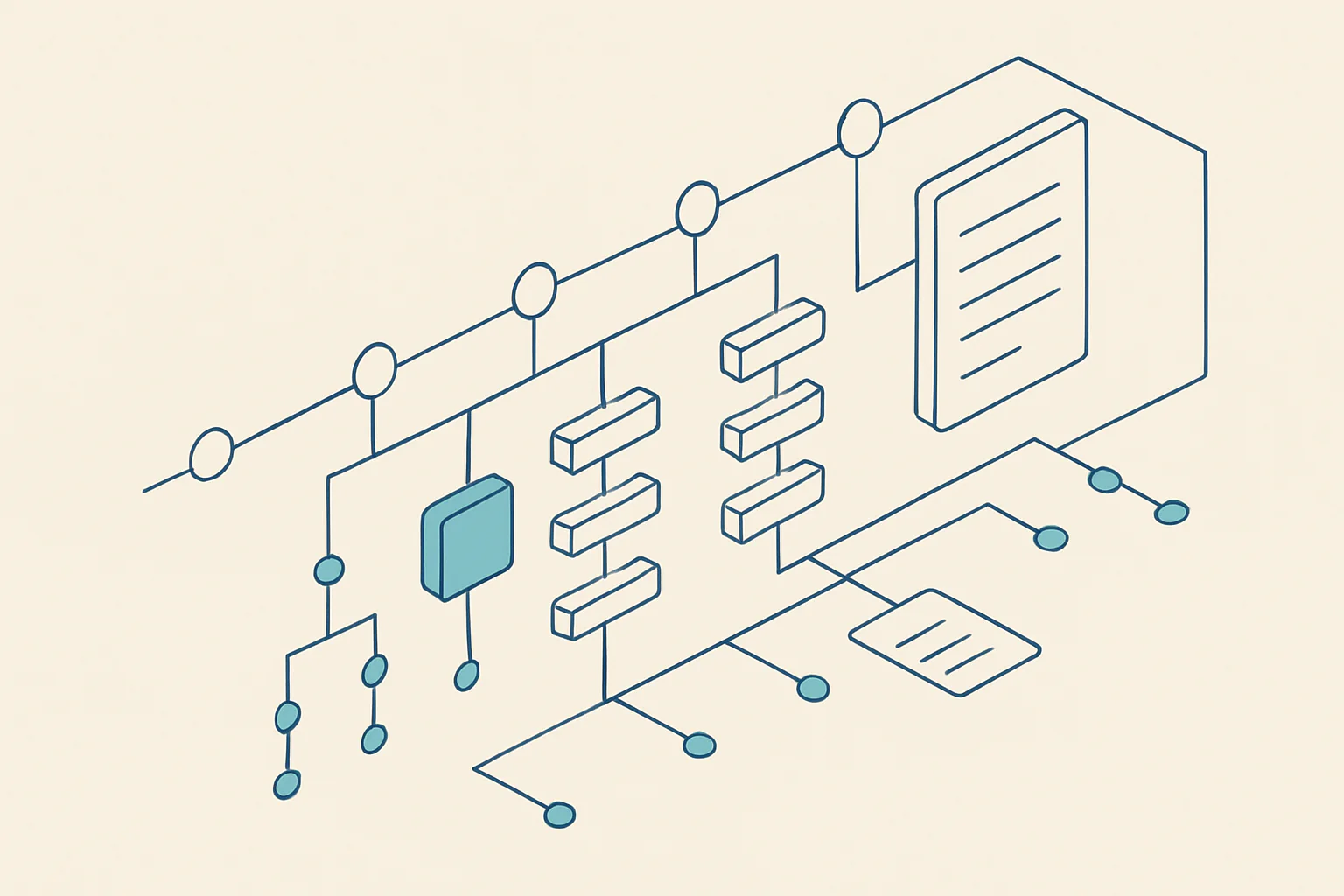
- Ingest and validate at the boundary. Whatever arrives — an EMR feed, a documentation platform's output, a structured export — is validated and mapped to canonical FHIR R4 resources before anything else touches it.
- Run all intelligence against the canonical core. Eligibility checks, prior-auth drafting, rules evaluation, denial-risk scoring — all of it reads and writes one internal model. One implementation, every market.
- Translate at the last mile. Only when a request is approved does the adapter render it into the rail's dialect — DHA eClaim XML, PKI-signed, over SOAP for DHPO; NPHIES-profiled FHIR for Saudi — and translate the payer's response back into the canonical model.
- Audit in one shape. Because every transaction exists canonically, the audit trail, dashboards and analytics are format-agnostic. A denial in Dubai and a denial in Riyadh are comparable rows, not different species.
This is exactly how we architected Medexa. Its agents — eligibility, prior authorization, and the claims pipeline behind them — are entirely rail-agnostic; the adapter layer speaks eClaimLink and NPHIES today and can add a US clearinghouse without touching a line of agent logic. That's also why "integration" with a provider doesn't mean rip-and-replace: the adapters meet the systems where they already are.
The takeaway
Mandated rails removed the excuse. The transport is there, standardized and compulsory — what's missing at most providers is the intelligence layer between their systems and the wire. Build that layer once, canonically, and the rails become what regulators intended: infrastructure, not a second job.
Automation built for your rails
Medexa runs a canonical FHIR R4 core with adapters for eClaimLink and NPHIES — eligibility and prior-auth agents drafting decisions your team approves, on the infrastructure you already use. Talk to us about your integration landscape.


Comments
Comments are warming up. Live, no-sign-in discussion will appear here shortly.
Have a question now? Email info@allstartech.net.